BKT’s Tomorrow Water Project reimagines wastewater treatment as a path to inclusive sanitation and clean water for all—aligned with the UN SDGs and brought to life through Co-Flow Campus.
TWP: Ensuring Everyone’s Right to Clean Water
BKT believes that clean water is a right—not a privilege. The company is working to transform the cost flow of wastewater treatment into a stream of value by building sustainable sanitation systems that are accessible to all.
Co-Flow Campus is the real-world model that brings this vision to life.
The Urgent Need for Inclusive Sanitation
Access to clean water and sanitation is a fundamental human right, but the global reality remains dire.
One in three people still relies on contaminated water, and approximately 1,000 children die every day from waterborne diseases. A major barrier to progress is the high cost of building and operating conventional wastewater treatment plants, particularly in low-resource settings.
Turning Wastewater into Opportunity: The Vision of TWP
To address this global challenge, BKT launched the Tomorrow Water Project (TWP)—an initiative that goes beyond technology to rethink the value of wastewater.
By recovering organic matter, nitrogen, and phosphorus, TWP turns former pollutants into valuable resources. The ultimate goal is to transform wastewater treatment plants from cost centers into profit-generating assets under the guiding philosophy of “From Cost Stream to Profit Stream.”
This vision has been shaped through real-world experiences in developing countries—providing technical consulting for the restoration of the Klang River in Malaysia, contributing to the cleanup of Lake Ypacarai in Asunción, Paraguay, and supporting environmental infrastructure planning across 12 provinces in Vietnam.
Despite the technical ability to supply clean water, financial and infrastructural limitations have prevented many regions from implementing effective solutions. TWP was born from these global realities—as a practical, integrated, and scalable model for both developed and developing countries.
In 2016, the same year the UN launched the Sustainable Development Goals (SDGs), TWP was officially registered as a UN SDG Action (#40493). Later that year, at the UN ECOSOC High-Level Political Forum, TWP was recognized as the only wastewater treatment model ideally suited for developing countries.
Co-Flow Campus: The Engine Driving a Sustainable Future
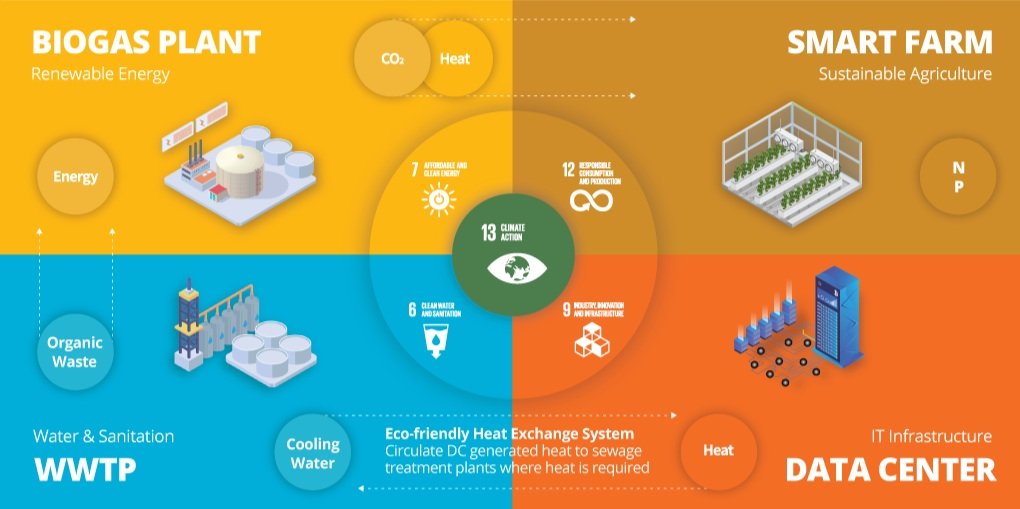
At the heart of this project is the Co-Flow Campus—a modular, self-sufficient system that integrates wastewater treatment, biogas production from organic waste, water reuse, digital infrastructure such as data centers, and smart farming.
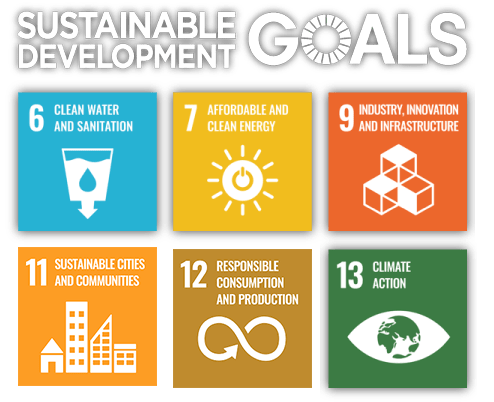
It is adaptable not only to developing nations but also to dense urban areas with limited space. Co-Flow Campus directly supports six UN SDGs:
BKT’s commitment to sustainable sanitation innovation and its global impact have been widely recognized.
- The company has been named a Global Top Performer in the SDG Business Index by the UN SDGs Association for six consecutive years.
- CEO Dong-Woo Kim has been honored as a Global Sustainable Leader for six years in a row, and received the Order of Industrial Service Merit (Bronze Tower) from the Korean government.
At BKT, technology is not the goal—it is a means.
The true mission of the Tomorrow Water Project is to redefine wastewater as an opportunity—to ensure that everyone, everywhere can enjoy their right to clean water.
Co-Flow Campus is the engine that turns this belief into reality.
Ready to learn more about the Tomorrow Water Project?

Leave a comment