Discover how BKT CEO Dongwoo Kim launched the Tomorrow Water Project, an award-winning UN SDG initiative transforming wastewater into a global sustainability solution.
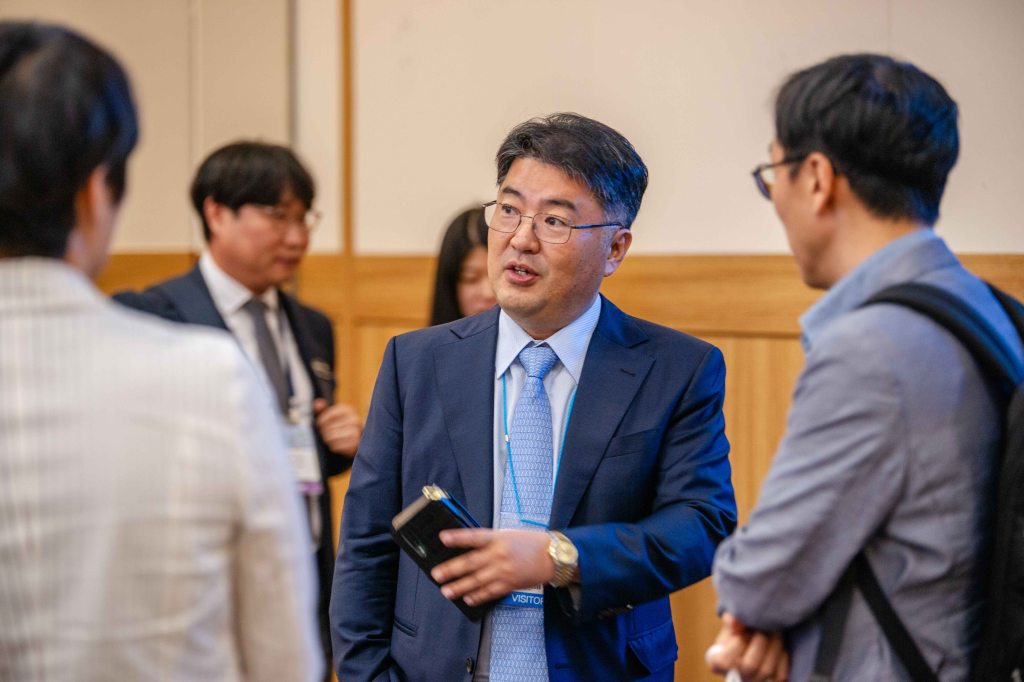
In 2021, Dongwoo Kim, the founder and CEO of BKT, was named one of the “Global Sustainable Innovation Leaders” for the third consecutive year. To mark this milestone, he sat down for an in-depth interview to share the vision, values, and technologies that shaped BKT’s Tomorrow Water Project—a global initiative officially recognized by the UN SDG platform.
We now share the full transcript of that interview, which reveals the passion, strategy, and leadership behind BKT’s mission to build a clean and beautiful world beyond waste.
Q. You are the first in the environmental industry to be selected as a “Global Sustainable Innovation Leader” for three consecutive years. Why do you think you were chosen?
A. Since the launch of the UN Sustainable Development Goals (SDGs) in 2016, we have consistently focused on “water” as a core theme, connecting it with renewable energy, climate change, smart cities, public infrastructure, and resource reuse through both technology development and business implementation. I believe this consistent approach was the main reason for the recognition.
BKT’s Tomorrow Water Project (TWP) is the only wastewater-related initiative officially listed on the UN SDGs platform. While the platform initially did not draw much attention, it has since become so prominent that it no longer accepts new initiative registrations. From the beginning, we treated the SDGs not just as a visionary declaration or promotional tool but as a strategic framework for real action—developing concrete technologies and solutions aligned with these goals.
As a result, our technology-driven solutions have expanded in the market. Our annual project orders, which used to remain around KRW 20–30 billion, surpassed KRW 100 billion for the first time last year, and this year we are targeting KRW 150 billion. With successful technology validation in Korea and the U.S., we are now ready to supply our solutions to developing countries suffering from water-related challenges.
Q. Can you explain what the Tomorrow Water Project (TWP) is, and why you proposed it as a UN SDGs initiative?
A. The Tomorrow Water Project (TWP; UN SDG Action #40493) is a new model for wastewater treatment designed for developing countries and the future. We officially registered it on the UN SDGs platform in 2016. TWP integrates wastewater treatment facilities, biogas production plants that handle various organic wastes, and energy-saving data centers that use treated water for cooling—all in one site. The goal is to address water issues, climate change, and the digital and economic divide simultaneously.
In line with the UN SDGs slogan “Leave No One Behind,” TWP was created to offer practical solutions for developing countries that face multiple challenges at once. I believe one reason the earlier MDGs (Millennium Development Goals) didn’t achieve substantial results was that they lacked sustainable business incentives—philanthropy alone was not enough. What’s needed is a model that isn’t driven by greed but can still generate long-term contributions to society.
One of the principles we firmly upheld while preparing the proposal was that we would not compromise on water quality under the excuse of affordability. In other words, we rejected the idea of “appropriate technology” that settles for lower standards just because it’s for developing countries. Instead, we committed ourselves to overcoming those barriers through science and engineering.
Q. What are the core technologies behind TWP, and how are they being developed?
A. We preemptively developed key technologies to realize an integrated model centered on wastewater. First, we developed Proteus technology to separate solids (sludge) from wastewater as much as possible. The more solids we remove and convert into biogas, the more energy we can generate. At the same time, minimizing the remaining organics reduces the energy needed for treatment—creating a win-win effect.
By co-digesting not only sewage sludge but also food waste, livestock manure, and other organic waste from the local area, we achieve economies of scale in biogas production, making energy self-sufficient wastewater treatment possible. Organic waste that would otherwise be dumped in landfills and emit methane—80 times more harmful to the climate than CO₂—can instead be transformed into renewable energy.
However, integrated digestion creates challenges: high-nitrogen wastewater and increased residual solids. That’s why we developed AMX, our award-winning nitrogen removal technology, and DRACO, which reduces solids while increasing biogas production. These technologies are currently being validated through a pilot facility funded by Korea’s Ministry of Industry in Daegu, where the entire process is being demonstrated.
Q. We heard that world-renowned experts in water treatment are part of the TWP Advisory Board. Could you tell us who they are and what roles they play?
A. The TWP Advisory Board is a group of mentors who believe in our vision and generously share their knowledge, networks, and experience. The chair is Dr. Shinjo Kang, a respected figure with over 40 years of experience in the U.S. EPA and top environmental consulting firms.
We’re also joined by outstanding experts from around the world. For example, Dr. Joan Rose of Michigan State University, who received the Stockholm Water Prize—often referred to as the “Nobel Prize of Water.” Dr. Janet Brown is the former president of the Global Water Environment Federation. Dr. Sandeep Sathyamoorthy currently leads innovation at Stantec. And Paul O’Callaghan of BlueTech Research co-produced the Netflix documentary Brave Blue World alongside actor Matt Damon. These are all highly respected figures in both academia and industry.
The board plays three main roles. First, they provide technical advice on which treatment processes are most suitable for developing countries. Second, they help us identify which countries are best suited for pilot projects and how to execute them effectively. Third, they guide us on funding strategies—especially through nonprofit and international channels.
We’ve structured the TWP rollout across the 15-year span of the UN SDGs, from 2016 to 2030, in three stages. The first phase focused on developing and validating the necessary technologies. We’re now in the second phase: preparing for pilot deployments. The final phase will be expansion and global dissemination. At that point, we plan to spin off the advisory board into an independent nonprofit to drive practical progress toward the SDGs on a global scale.
Q. BKT is known for being the first in the water industry to apply Fourth Industrial Revolution technologies like AI. What is your goal with Water AI?
A. At BKT, we not only develop core technologies for wastewater treatment, biogas production, and sludge reduction—we also design, construct, and operate complete processes. While we still offer individual technologies upon request, we are increasingly providing full-process solutions.
Traditionally, these projects go through multiple step proposals, design, construction, and operations, which require a great deal of time and money, especially burdensome for developing countries. Even before launching TWP, we had been working to apply digital technologies to shorten and streamline this value chain.
Now, for some of our proprietary technologies, we can generate proposals—previously a 2–3 week process—and even complete basic designs, which used to take months, in just 1–2 days. We’re currently expanding this automated design system into construction management and digital twin-based operation. Our long-term goal is to create a deep learning-based platform that can automatically handle the design, construction, and operation of both BKT and non-BKT technologies.
One challenge, however, is talent. Most AI experts are drawn to more lucrative fields like pharmaceuticals, autonomous vehicles, or smart farming. It’s been so difficult to recruit in this area that I even convinced my second child—who was about to return to the University of Chicago after military service—to switch majors from economics to computer science. I believe that even a small hill, if climbed early and well, can offer global recognition.
Later this year, we plan to make proactive investments in this field, boost our U.S. business, and pursue external investment in our U.S. subsidiary—especially to scale TWP in developing markets.
Q. Lastly, why did you choose to pursue a career in environmental solutions?
A. The environmental sector inherently involves public responsibility. For a business to be truly sustainable in this field, it must go beyond profit and embrace social accountability. This kind of leadership is not just altruistic—it’s essential for long-term business success.
We live in a world where information spreads rapidly. In the future, leading companies won’t be defined by their revenue or workforce size, but by the social impact they create. We’re already seeing this shift, with increased attention to sanitation during COVID-19, growing awareness of climate change, and the rise of ESG as a core business principle.
We are at a moment of historic transformation. At BKT, our fundamental purpose is to help restore our damaged planet into a clean and beautiful world, like it once was. We find fulfillment in creating solutions and values that have never existed before—and in delivering them to where they’re needed most.
Ready to learn more about Tomorrow Water Project?

Leave a comment