BKT’s AAD technology delivers stable, high-yield anaerobic digestion for high-solids waste, helping facilities meet biogas targets and reduce emissions.
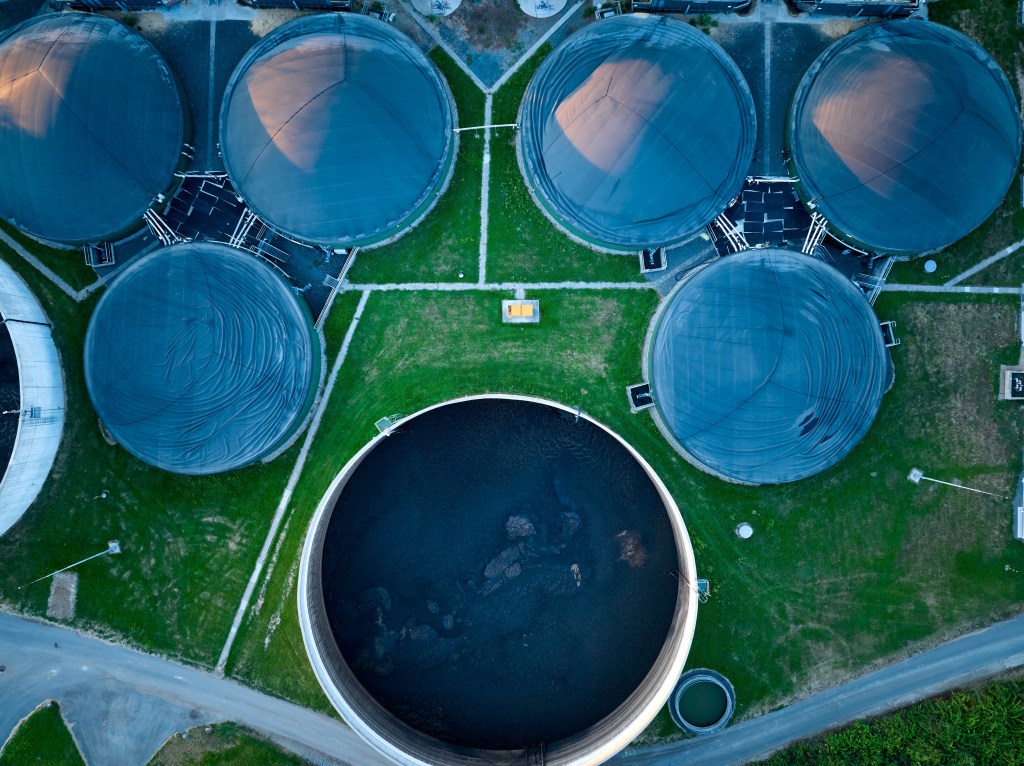
Reliable Biogas Production
As governments and industries worldwide work to reduce carbon emissions and transition to circular resource systems, anaerobic digestion has re-emerged as a key enabling technology.
BKT’s proprietary Advanced Anaerobic Digestion (AAD) technology plays a key role in this transition as a core component of the Integrated Upstream Process (IUP).
AAD improves biogas production efficiency and process stability, overcoming long-standing challenges that have limited the widespread adoption of AD, particularly in municipal and high-solids waste applications.
What Sets AAD Apart?
AAD is based on an Anaerobic Sequencing Batch Reactor (ASBR) rather than a conventional continuous-flow system. This brings four key benefits:
- Improved microbial retention: Retains slow-growing anaerobes longer, ensuring resilience during load fluctuations.
- Extended retention time: Allows more complete breakdown of solids, improving gas yields.
- Reduced process instability: The feed-settle-discharge cycle helps prevent system shock.
- Automated sediment discharge: Periodic removal of solids prevents buildup and lowers maintenance needs.
This configuration makes AAD a flexible and operator-friendly solution for facilities treating food waste, livestock manure, or co-digestion streams.
“The AAD mixer ensures full digestion efficiency by eliminating dead zones, enhancing biogas yield, and enabling easy maintenance through a flexible, CFD-verified design.”
Proven Success in Full-Scale Operations
AAD has been deployed successfully in multiple commercial-scale projects across Korea:
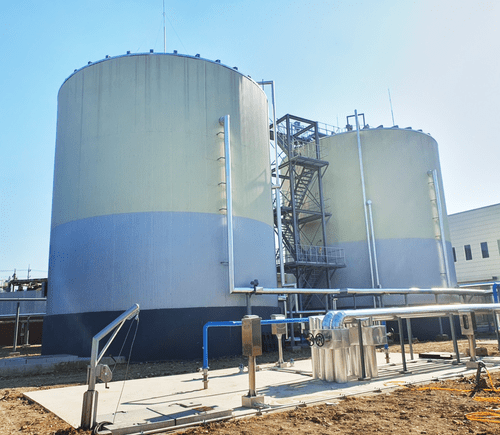
Miryang Integrated Biogas Plant (Completed: Jan 2023)
Processes 100 tons/day of combined food waste and livestock manure. With AAD, biogas yield exceeded design expectations by more than 30%. The biogas generated is used for on-site electricity production, saving over KRW 150 million (approx. USD 115,000) in annual power costs.

Gimhae Public Manure Facility (Completed: May 2024)
Designed to treat 200 tons/day of mixed organic waste. Achieved 30% higher gas generation than design estimates, confirming the technology’s scalability.
Ongoing projects in Daejeon, Hwacheon, Seongju, and Muan further cement AAD’s reputation as Korea’s leading AD solution for public and private biogas infrastructure.
Built for Evolving Markets and Regulation
Korea’s recently enacted Biogas Promotion Act mandates specific biogas production targets for municipalities, based on the volume of organic waste generated. Starting next year, these requirements are expected to extend to the private sector as well.
BKT’s AAD technology provides municipalities and operators with a robust, efficient pathway to compliance. Its stable performance and high gas yield make it well-suited for meeting regulatory targets while reducing greenhouse gas emissions, energy consumption, and disposal costs.
As international interest in biogas continues to grow, BKT is expanding its proven domestic success to global markets—offering reliable, field-tested solutions to partners around the world.
Designed Through Experience, Proven by Results
AAD was engineered to address real-world operational pain points: inconsistent gas yields, poor handling of high-solids inputs, and complex maintenance. With a design grounded in operator needs and years of research, AAD bridges the gap between laboratory breakthroughs and dependable field performance.
As Albert Einstein once said, “Information is not knowledge. The only source of knowledge is experience.” BKT builds both—through real projects, measurable results, and long-term client partnerships.
AAD is more than just a technology. It’s a proven platform for renewable energy generation, climate impact, and global deployment.
Technology Built on Experience
AAD was developed to address persistent challenges in anaerobic digestion—namely, unstable gas production, difficulty handling high-solids waste, and operational complexity. By combining proven engineering with operator-centric design, BKT has created a solution that bridges the gap between lab innovation and real-world performance.
As Albert Einstein once said, “Information is not knowledge. The only source of knowledge is experience.” That’s why BKT builds knowledge—and trust—through real-world projects, measurable outcomes, and long-term performance.
AAD is more than technology. It’s a platform for sustainable energy, climate action, and global market readiness.
Ready to upgrade your digester performance?

Leave a comment