Learn how BKT’s advanced anaerobic digestion (AAD) boosts biogas yields, cuts GHGs, and transforms waste into clean energy across municipal facilities.
With the implementation of Korea’s Biogas Act, integrated biogas solutions using organic waste are emerging as practical alternatives to achieve carbon neutrality. This shift is bringing renewed attention to the technologies of BKT, a specialized water treatment company.
BKT is the only company in the world to independently own all key technologies required for integrated biogas systems—Advanced Anaerobic Digestion (AAD), thermal hydrolysis and sludge reduction (DRACO), and high-strength nitrogen removal (AMX). In particular, BKT’s AAD technology has demonstrated operational stability and high biogas yields in full-scale facilities in Miryang and Gimhae. These successes are now paving the way for global carbon reduction initiatives.
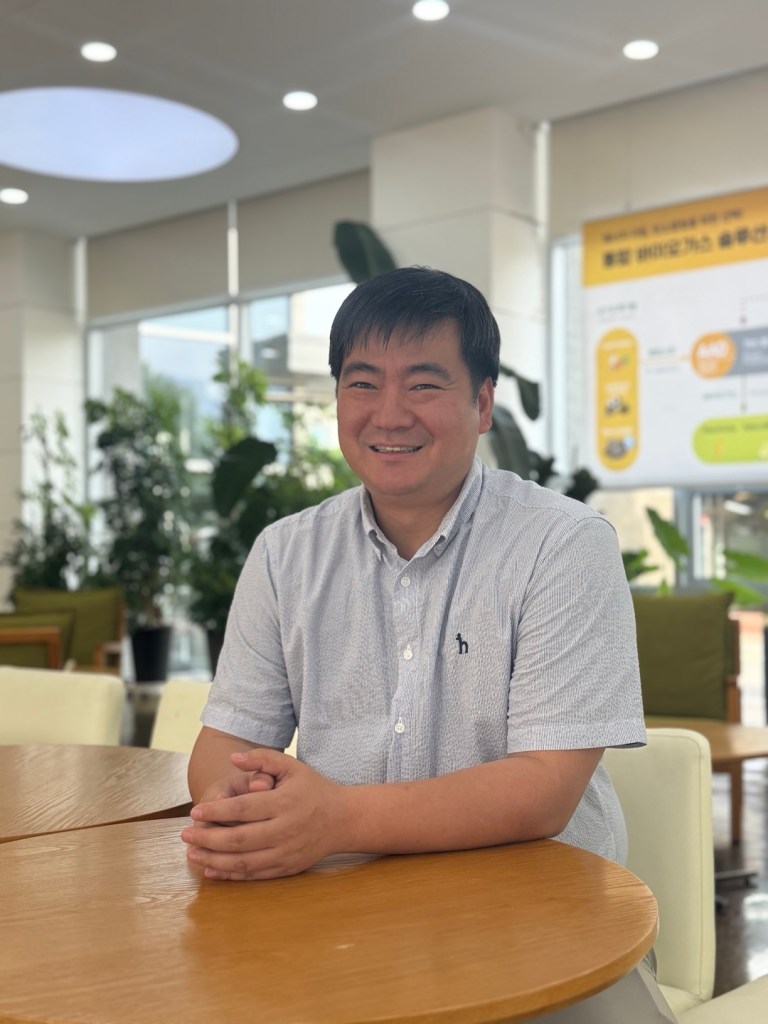
Jaemin Choi, Project Owner for AAD at BKT, shared insights into the technology’s development journey, key achievements, and future roadmap for global expansion.
Q. The integrated biogas market is now gaining momentum. Why is biogas technology especially important at this time?
Conventional anaerobic digesters often suffer from microbial washout and unstable performance. BKT’s AAD was developed to overcome these issues using ASBR (Anaerobic Sequencing Batch Reactor) operation, which preserves microbial concentration and extends solids retention time, significantly boosting biogas production efficiency.
Additionally, AAD features a built-in sediment discharge system at the digester’s base. This eliminates the need for shutdowns and costly re-seeding during dredging, greatly reducing operating costs and maintenance burdens.
Q. What have been the results at the Miryang and Gimhae facilities using AAD?
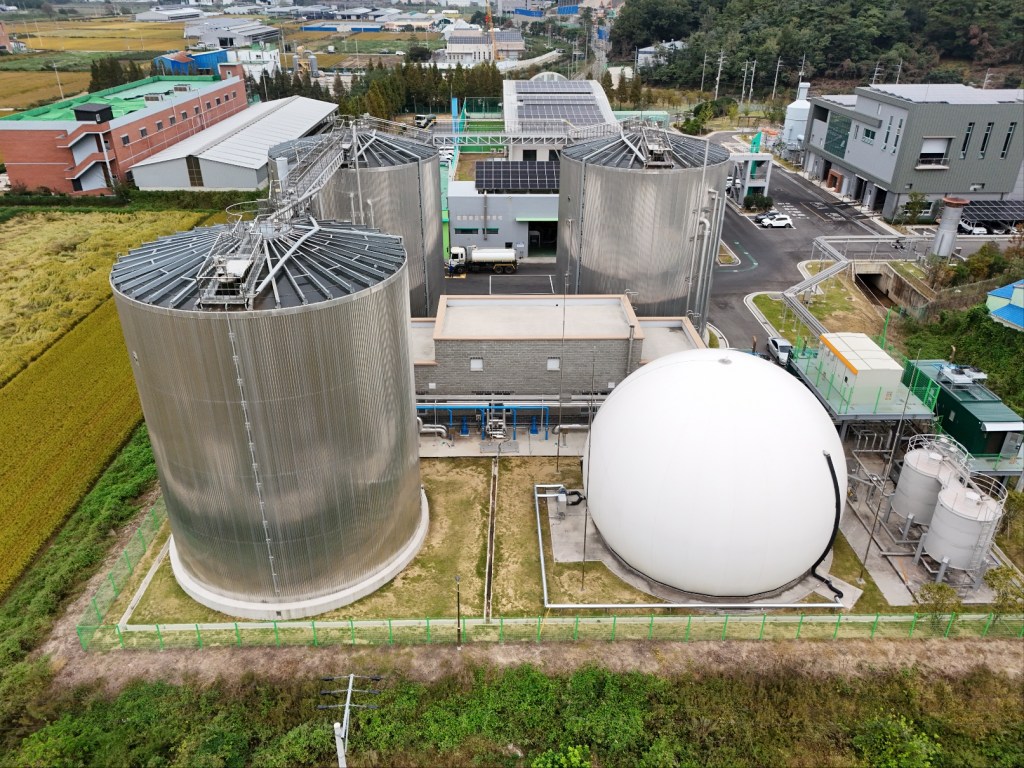
The first full-scale implementation of AAD was at the Miryang Livestock Manure Treatment Plant, which has been processing over 100 tons of food and livestock waste daily since January 2023. It has run stably without dredging, producing over 30% more biogas than designed. This has saved about 200 million KRW (approx. $150,000 USD) annually in electricity costs.
Gimhae’s facility is the second case, treating 150 tons of livestock manure and 50 tons of food waste daily since its commissioning in May 2024. Despite being early in operation, it is showing clear performance results.
AAD is also planned for future deployment in Hwacheon, Seongju, Daejeon, and Gwangju, contributing to a municipal-centered carbon-neutral wastewater model.
Q. Integrated biogas solutions require more than just anaerobic digestion, correct?
Exactly. It’s not only about maximizing biogas yield—cost-effective treatment of nitrogen and sludge in digested effluent is equally critical.
Traditionally, treating high-strength wastewater consumed more energy than was generated via biogas, undermining economic viability. Sludge disposal costs added another burden.
To address this, BKT developed the AMX (Anammox) process, which removes nitrogen with 60% less aeration and no need for external carbon. It is already deployed at the Noksan WWTP in Busan, saving over 1.5 billion KRW in annual operating costs.
The DRACO thermal hydrolysis system, applied pre- or post-digestion, reduces sludge volume and boosts biogas yield. It also allows digester recirculation of filtrate for even greater energy recovery.
By integrating AAD, AMX, and DRACO, BKT offers a site-specific solution called the Integrated Upstream Process (IUP), handling biogas production, sludge reduction, and nitrogen removal in one system.
Q. How is IUP different from traditional biogas systems?
IUP goes beyond just biogas production. It enables electricity and heat recovery, syngas conversion, and high-value resource recovery. With technologies for sludge reduction and ammonia recovery, it’s evolving into a circular economy model for wastewater.
Its modular and adaptable configuration allows it to fit diverse local needs, making it highly suitable for international waste-to-energy projects. BKT is now actively connecting IUP with international carbon credit programs and demonstration projects abroad.
Q. What is the actual contribution of AAD to carbon neutrality?
AAD reduces emissions by replacing composting and minimizing fossil fuel use. In Miryang, for example, switching from composting to AAD reduced annual greenhouse gas emissions by about 6,500 tons.
When combined with DRACO in a Post-AD setup, sludge generation can be reduced by up to 75% and GHG emissions by over 70%.
Q. What changes have you seen in the field since the biogas production mandate was introduced?
Expectations have risen significantly. In the past, it was enough for facilities to simply function, but now stakeholders demand both measurable output and operational stability.
Typically, new biogas plants experience startup issues, but Miryang and Gimhae have operated stably for over 2.5 years and 1 year, respectively. Their high uptime and 30% higher-than-designed biogas yield have proven the competitiveness of BKT’s technology—driving growing interest from local governments.
Q. Finally, what is your vision as AAD’s Project Owner?
Anaerobic digestion requires consistent oversight—from development to installation, operation, and improvement. BKT’s PO (Project Owner) system enables full lifecycle management, which is key to successful technology deployment.
My goal is to further enhance AAD and expand its adoption not only across Korea but also into Southeast Asia, the Middle East, and other emerging water-energy markets.
Want to learn more about AAD technology?

Leave a comment