Discover how BKT’s AAD technology boosts biogas production by 30% and cuts greenhouse gas emissions, with proven results in Miryang and Gimhae.
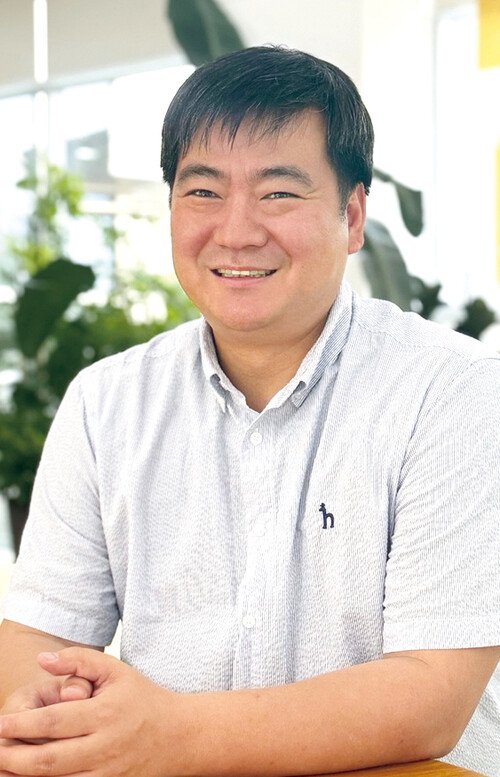
“Advancing biogasification technology is an essential task for reducing greenhouse gas emissions,” said Jaemin Choi, Project Owner (PO) of AAD (Advanced Anaerobic Digestion) at BKT.
BKT (CEO Dongwoo Kim) is the only company in the world that possesses all the core technologies for integrated biogasification, including improved anaerobic digestion (AAD), sludge solubilization and reduction (DRACO), and high-strength nitrogen removal (AMX).
In particular, AAD technology applied at the integrated biogasification facilities in Miryang and Gimhae has proven both operational stability and high biogas productivity. Based on these results, the company is now actively pursuing global greenhouse gas reduction projects.
Gas News met with Jaemin Choi, the PO overseeing AAD technology, to hear about the development background, achievements, and future strategy.
“With the Biogas Act mandating implementation from January 1 this year, biogasification is now emerging as a realistic alternative for both greenhouse gas reduction and energy self-sufficiency by converting organic waste into energy,” Choi said.
He explained that BKT’s AAD technology was developed to overcome the limitations of conventional anaerobic digestion.
“Conventional technology had issues such as decreased reaction efficiency due to microbial loss and unstable operation. AAD adopted the ASBR (Anaerobic Sequencing Batch Reactor) method to retain high concentrations of microorganisms and ensure long solids retention time, thereby significantly improving biogas production efficiency.
Also, by applying a sediment discharge system at the bottom of the digester, we greatly reduced the burden of dredging, including operational shutdowns and re-inoculation, and lowered operating costs,” he said.
BKT’s AAD is already in operation at integrated biogasification facilities in Miryang and Gimhae.
“Our first application of AAD was at the Miryang Clean Water Center’s livestock waste treatment facility. Since January 2023, it has been treating over 100 tons of food waste and livestock manure daily. It has operated stably without dredging, producing more than 30% biogas compared to the design target. This has saved about KRW 200 million in electricity annually, and the sediment discharge system has also contributed significantly to dredging cost reduction.
The second site is the Gimhae facility, which processes 150 tons of livestock manure and 50 tons of food waste per day. Since its completion in May 2024, it has been operating stably and showing clear performance, even in the early stages.
AAD is scheduled to be expanded to Hwacheon, Seongju, Daejeon, and Gwangju,” he said.
BKT also provides the IUP (Integrated Upstream Process), a comprehensive solution.
“IUP goes beyond simple biogas production—it enables power and heat utilization, syngas conversion, and high-value resource recovery.
With integrated sludge reduction and ammonia recovery, IUP is evolving into a resource-circulating model. It can be flexibly applied to various field conditions, both in Korea and internationally, and we are preparing to enter the global waste treatment market,” Choi said.
Choi added that AAD plays a major role in reducing greenhouse gases.
“For example, in Miryang, switching from composting to AAD-based biogasification reduced greenhouse gas emissions by about 6,500 tons annually.
When combined with DRACO in the Post-AD process, sludge generation is reduced by up to 75% and greenhouse gas emissions by over 70%,” he said.
He concluded by sharing his future goals.
“Anaerobic digestion technology must be managed consistently—from development to installation, operation, and improvement—to maintain competitiveness.
BKT’s PO (Project Owner) system makes this lifecycle management possible and serves as a foundation for technology dissemination.
Going forward, we aim to further advance AAD and promote it in domestic markets as well as overseas water treatment and renewable energy markets in Southeast Asia and the Middle East.”
*Source: Gas News (https://www.gasnews.com/news/articleView.html?idxno=120560)

Leave a comment