As featured in Korea’s Maeil Business Newspaper, Tomorrow Water CEO Dongwoo Kim is introducing Korean wastewater innovations across the U.S.—with progress already underway.
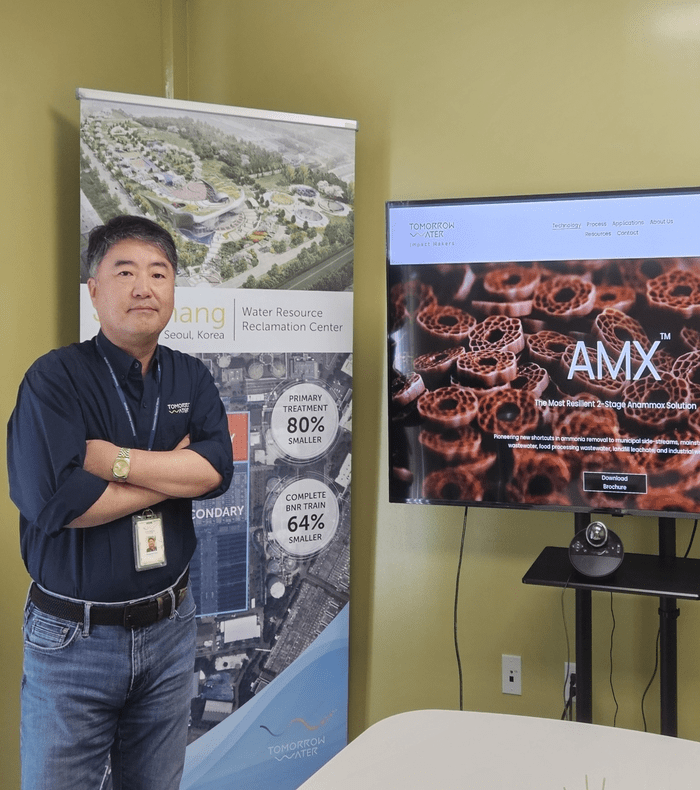
“When I first decided to enter the U.S. market, the opposition was intense. People doubted whether our technology could compete there. But I believed our ‘compressed growth’ technology had what it takes to succeed.”
Dongwoo Kim, CEO of Tomorrow Water, reflected on the company’s early days during an interview at its Anaheim office. Tomorrow Water is a U.S. subsidiary established in 2008 by BKT, a leading Korean water treatment firm. While most Korean water treatment companies focused on Southeast Asia or China for overseas expansion at the time, Kim—formerly an accountant—saw the U.S. as a more suitable market due to the public-sector-driven nature of the industry.
The United States holds one-third of the estimated KRW 1,000 trillion global water treatment market, making it the largest in the world. Its wastewater infrastructure dates back over 100 years. Kim recalled, “When I visited a wastewater plant in Milwaukee, the blueprint was dated 1919. I thought, ‘They’re still using facilities built over a century ago?’ That’s when I realized the huge potential in the retrofit market.”
Despite entering the market in 2008, it took more than a decade of perseverance to gain traction. Major global water companies dominated the U.S. scene, and Tomorrow Water’s localization strategy was lacking. Moreover, public institutions were hesitant to award contracts to a newcomer from Korea. The turning point came through technology. Kim’s breakthrough occurred in Milwaukee, where Tomorrow Water won first prize at the Water Council’s wastewater innovation competition with its Proteus system—a land-saving, compact design using biofilters. This led Milwaukee, which was frequently hit by sewage overflows during heavy rains, to partner with the firm.
Proteus reduces land and facility needs by up to 80% compared to conventional designs. It was later selected by Global Water Intelligence as one of the world’s top 10 water technologies.
“In 2022, we signed a KRW 18 billion project with the City of Milwaukee to improve their wastewater plant,” Kim said. “Since then, we’ve been winning projects across the U.S., including California, Hawaii, Georgia, and Connecticut.”
He added, “We are the only water technology company in the world to offer an integrated upstream process that includes waste-to-biogas conversion, high-strength nitrogen wastewater treatment, and sludge reduction—all developed in-house.”
As business in the U.S. grew, Tomorrow Water’s performance began surpassing that of its parent company. In 2023, BKT recorded KRW 32.2 billion in revenue, while Tomorrow Water posted KRW 42.4 billion.
Tomorrow Water is also expanding beyond the public sector into private contracts. “We successfully built wastewater facilities for U.S. plants of Korean companies like Pulmuone and SK,” Kim said. “Currently, we’re working on a large private-sector project worth KRW 90 billion.”
He anticipates even more opportunities as Korean companies increase U.S.-based manufacturing to avoid tariffs. “As more factories are built, demand for wastewater treatment facilities will grow,” he explained.
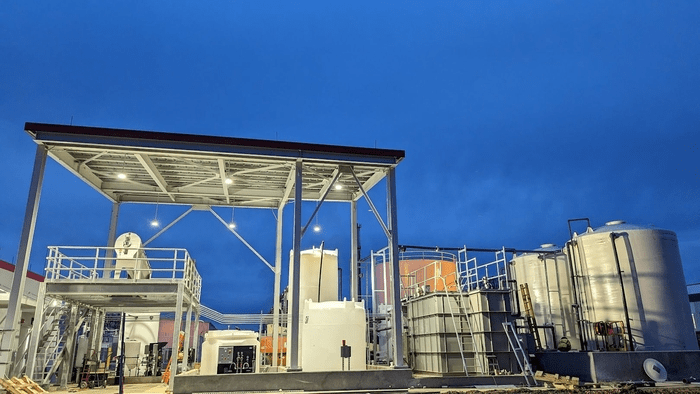
Meanwhile, parent company BKT has selected Samsung Securities as its lead underwriter and is gearing up for a KOSDAQ IPO in late 2026. Kim concluded, “Our goal is to become a major player in the U.S. water industry by offering not just technology and turnkey services, but also financing as a full package.”
*Source: Maeil Business Newspaper
Interested in working with us?
Let’s talk about sustainable wastewater solutions.

Leave a comment