Have we already forgotten COVID? BKT and KAD are building pandemic-responsive, energy self-sufficient wastewater treatment plants — a new model for global public health and sustainability.

The Hidden Link Between Wastewater and Infectious Disease
Microorganisms and viruses discharged through human waste are one of the major sources of urban infectious disease transmission.
According to the British Medical Journal (BMJ), sanitation — not vaccines or antibiotics — has contributed the most to the extension of human lifespan over the past 160 years.
If COVID-19 had been a waterborne disease, the global death toll might have been far more devastating.
Now, as climate change accelerates the thawing of ancient permafrost, scientists warn of dormant viruses awakening after tens of thousands of years, posing new biological threats to humanity.
Yet in many developing countries, wastewater treatment coverage remains below 30%.
While infrastructure construction may be supported by international aid, the high cost of annual operation and maintenance makes sustainable sanitation nearly impossible.
BKT’s Vision: Turning Wastewater Treatment into Pandemic-Resilient Infrastructure
BKT has long believed that sustainable sanitation must go hand-in-hand with energy self-sufficiency.
Under the vision of “From Cost Stream to Profit Stream,” the company developed the Tomorrow Water Project (TWP) and Co-Flow Campus (CFC) — a next-generation wastewater treatment model that transforms conventional plants into self-sustaining, multi-functional urban infrastructures.
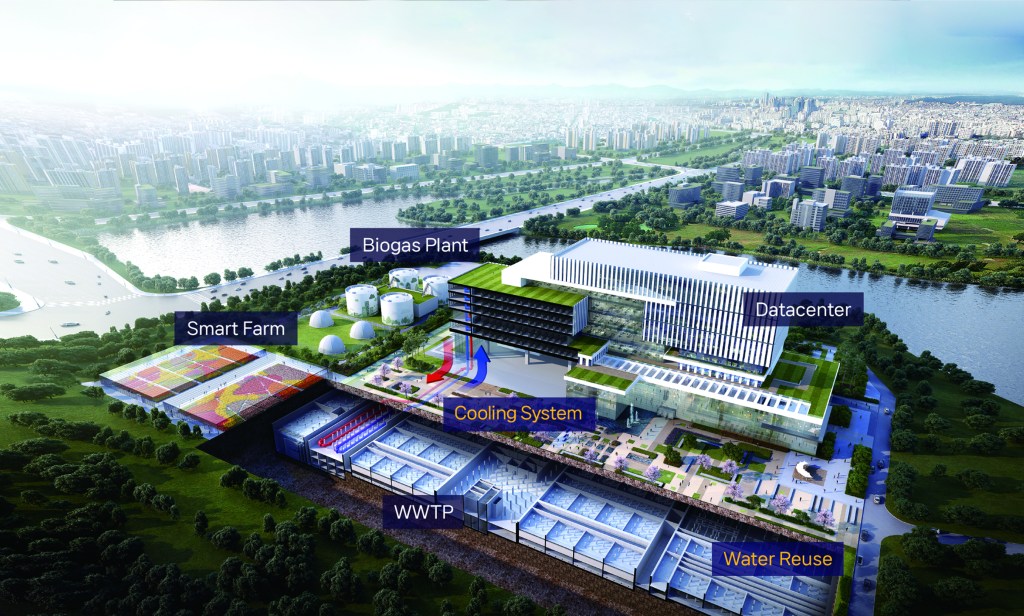
Inside every drop of wastewater lie untapped resources — organic matter for biogas, nitrogen and phosphorus for agriculture, and water for data center or SMR cooling.
By integrating biogas plants, smart farms, data centers, and renewable systems into wastewater treatment facilities, BKT’s Co-Flow Campus model enables energy recovery, cost reduction, and new revenue streams, ensuring long-term operational sustainability.
The concept, officially registered as a UN SDG Action (#40493), is already becoming reality through BKT’s core technologies — Proteus, AAD, AMX, DRACO, and Co-Flow — now commercially proven in real-world applications.
Partnering with KAD — Enhancing the Public Health Function of Wastewater Treatment
Recognizing that the primary mission of wastewater treatment is public health and sanitation, BKT has entered a strategic partnership with KAD (Korea Advanced Disease Detection), founded by Professor Sungpyo Kim of Korea University — a globally recognized authority in wastewater-based infectious disease surveillance.
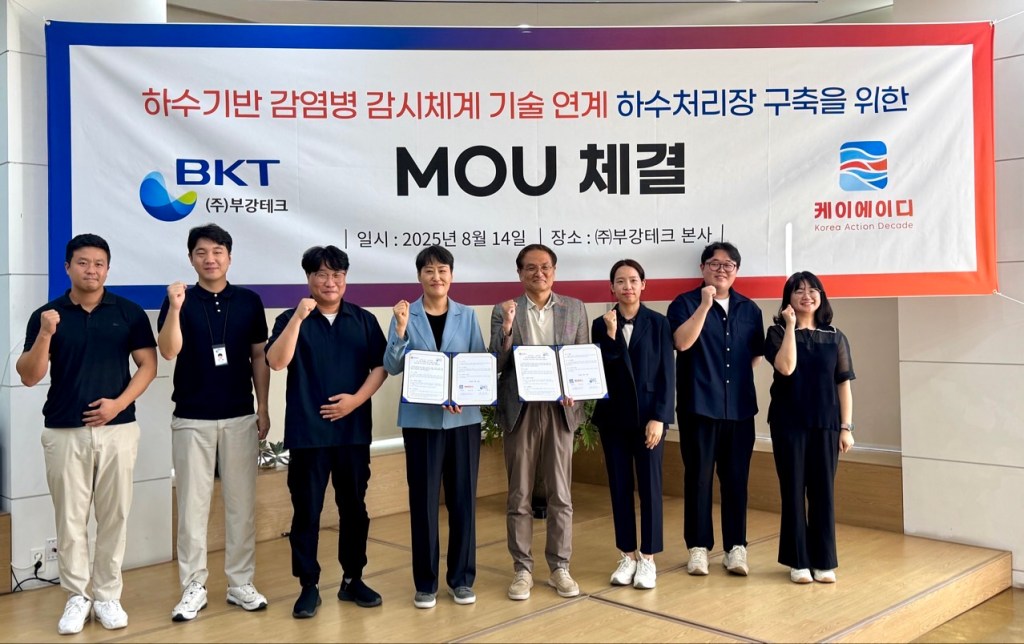
KAD specializes in city-level infectious disease monitoring using wastewater.
By applying PCR-based genomic amplification, the company detects pathogens in sewage to monitor infection trends in real time — even identifying asymptomatic carriers — while its LED-UV disinfection systems are already commercialized.
Through this collaboration, BKT is developing an energy self-sufficient, pandemic-responsive wastewater treatment model that will strengthen global resilience and be expanded to developing countries as part of its sustainable sanitation initiative.
Why This Approach Matters for Global Sustainability
Wastewater treatment is not just environmental infrastructure — it is a frontline defense for human health, energy security, and climate resilience.
BKT’s Co-Flow Campus model integrates:
- Epidemic surveillance and prevention,
- Energy independence through biogas generation,
- Revenue from data center cooling and land leasing, and
- Urban ecosystem restoration and value enhancement.
This holistic model offers a new paradigm for global leadership in sanitation, aligning with the UN SDGs and Korea’s vision for inclusive, sustainable infrastructure in developing nations.
Building Impact, Not Just Size
True global leadership will no longer be measured by size — but by impact.
Through innovative vision, global collaboration, and technologies that address both public health and sustainability,
BKT and its partners are redefining the role of wastewater treatment in the 21st century.
Together with KAD, BKT will continue to advance the Co-Flow Campus as a model for pandemic resilience — one that safeguards public health, achieves carbon neutrality, and creates economic value for the future.
Learn more about the Co-Flow Campus and Tomorrow Water Project.

Leave a comment