As AI accelerates global data center expansion, the world faces rising water, power, and land shortages. Discover how BKT’s Co-Flow Campus (CFC) model enables sustainable coexistence between data centers and wastewater plants — turning urban challenges into circular opportunities.
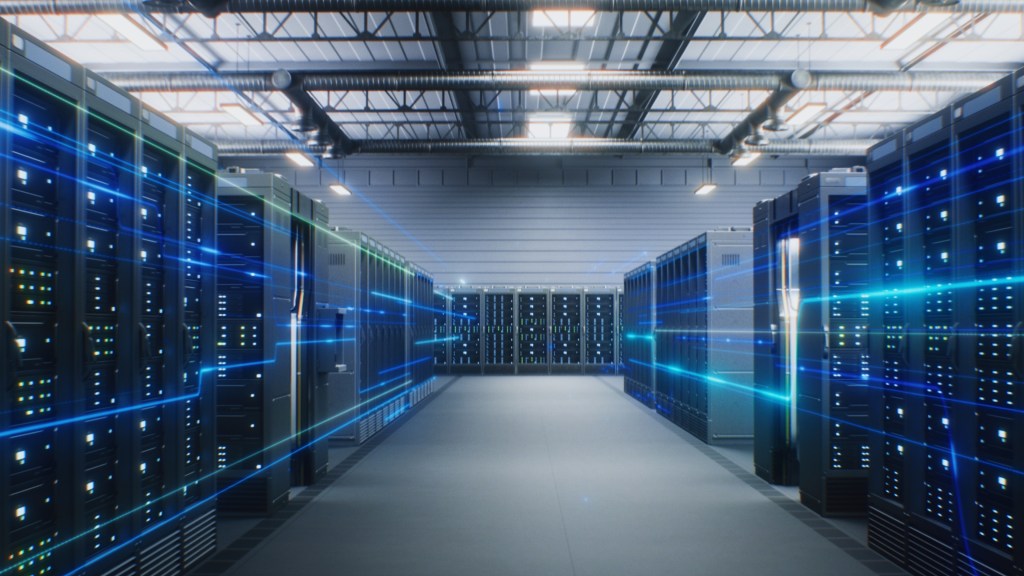
The AI era has brought with it an unprecedented hunger for data — and, inevitably, for data centers. Yet as these digital giants expand across the globe, they are colliding with three escalating crises: water scarcity, power shortages, and land constraints.
Every AI model trained, every cloud service launched, and every streaming platform scaled adds pressure to finite natural resources. According to recent studies, data centers already consume nearly 2% of the world’s electricity and billions of liters of water each year for cooling. Across North America, Europe, and Asia, utilities are warning of grid instability, while local communities worry about water depletion.
The message is clear: digital growth is becoming unsustainable if built on traditional infrastructure.
A Hidden Opportunity Beneath Our Cities
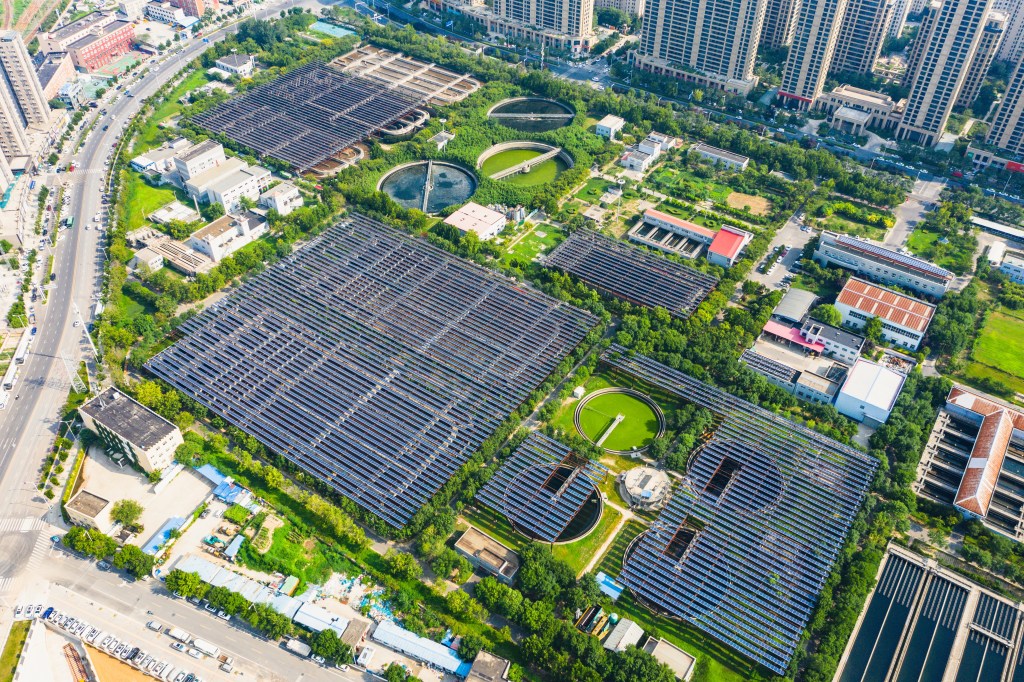
Interestingly, the answer to this global dilemma may lie not in building new facilities, but in reimagining the ones we already have.
Wastewater treatment plants — once seen merely as public utilities — sit on strategically valuable land, already equipped with access to water, energy, and urban infrastructure.
What if these sites became the foundation for the next generation of data centers?
By colocating data centers with wastewater treatment plants, cities can unlock synergistic resource use instead of competition for resources.
- Water: Treated effluent can serve as a renewable cooling source, drastically reducing the strain on freshwater supplies.
- Power: Biogas and heat recovered from wastewater processes can supplement energy for data center operations.
- Land: Existing wastewater facilities provide secure, serviced land close to urban cores — eliminating the need for costly new developments.
This model turns overlapping crises into interconnected solutions — a circular approach where data, energy, and water coexist within a single sustainable system.
The Co-Flow Campus: Turning Waste Into Opportunity
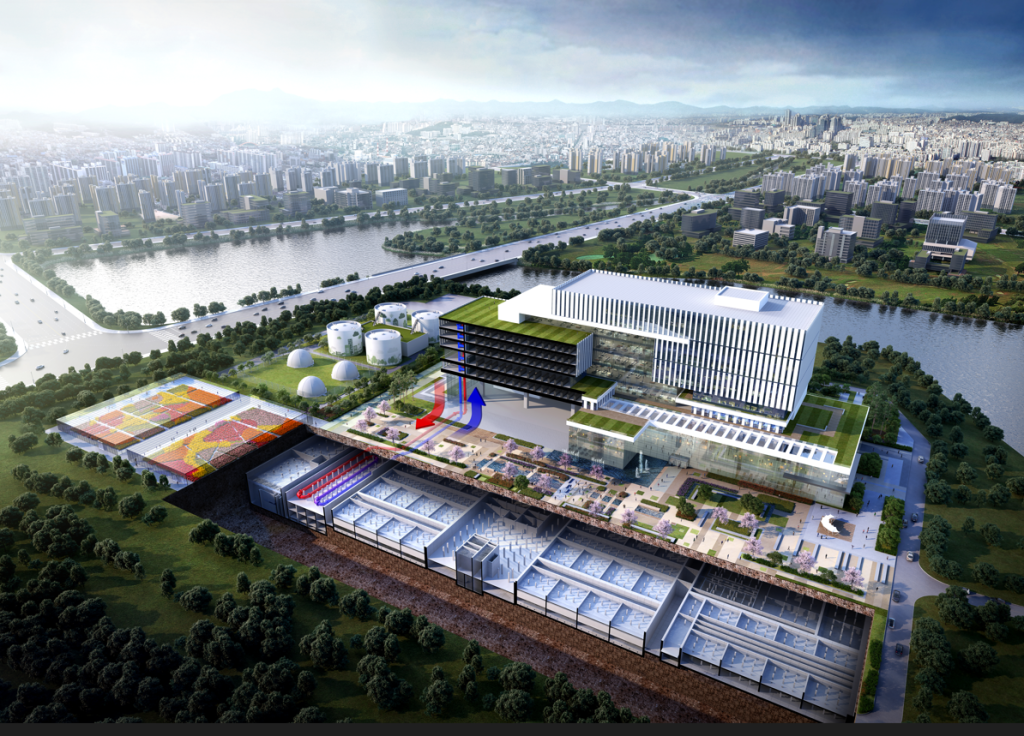
Recognizing this potential early on, BKT/Tomorrow Water developed the Co-Flow Campus (CFC) — a model that unites wastewater treatment, renewable energy generation, and data centers within one integrated infrastructure.
CFC isn’t just about efficiency; it’s about redefining how cities think about sustainability.
In this circular ecosystem, wastewater is not waste — it’s a resource. The treated water cools servers. The heat from servers enhances treatment efficiency. Biogas from sludge powers both systems.
Every flow — physical or digital — reinforces the other.
And because most wastewater plants are publicly owned, CFC enables a Public-Private Partnership (PPP) model: the public sector provides land and sanitation infrastructure, while the private sector invests in data center development. This shared-value structure ensures that environmental improvement and economic growth move together, not in conflict.
Why This Matters for Developing Countries
In developing nations, where sanitation gaps, unreliable power, and digital inequality coexist, the CFC model offers a realistic and scalable path forward.
Through blended financing — for instance, Korea’s Economic Development Cooperation Fund (EDCF) combined with private investment — CFC can transform wastewater treatment plants into self-sustaining urban assets.
Imagine a city in Southeast Asia or Africa where a new wastewater facility not only treats sewage but also:
- hosts a small data center supporting local cloud and AI services,
- produces renewable biogas energy, and
- recycles its water for industrial cooling or irrigation.
This isn’t futuristic — it’s an inclusive infrastructure model that aligns with both development goals and the digital economy.
From Scarcity to Synergy
For decades, wastewater treatment was seen as a cost — something cities had to fund, not something that could fund itself.
BKT’s vision, embodied in the Tomorrow Water Project (TWP), flips that paradigm: “The more wastewater we treat, the more value we create.”
By merging data infrastructure with environmental infrastructure, CFC demonstrates that sustainability and profitability can truly flow together. It transforms resource scarcity into resource synergy — exactly what the AI-driven world now needs most.
A New Chapter for Sustainable Data Infrastructure
As AI reshapes industries and economies, it also challenges us to rethink how we build the physical backbone of our digital lives.
Data centers and wastewater plants may seem worlds apart, yet their coexistence could be the cornerstone of a resilient, circular, and inclusive urban future.
The next frontier of digital infrastructure will not be defined only by faster computing or lower latency — but by how intelligently it uses water, energy, and land.
And that’s precisely what the Co-Flow Campus sets out to prove.
Partner With BKT to Build Sustainable Data Infrastructure in Developing Regions.

Leave a comment